
THE WOMAN THEY CALLED DIFFICULT A story of betrayal, hidden fortunes, family secrets, and the moment a woman finally discovers that forgiveness does not require surrender.
The moment my father realized he was sitting inside a building I owned, something changed in his eyes. It wasn’t pride. It wasn’t happiness. And it certainly wasn’t regre
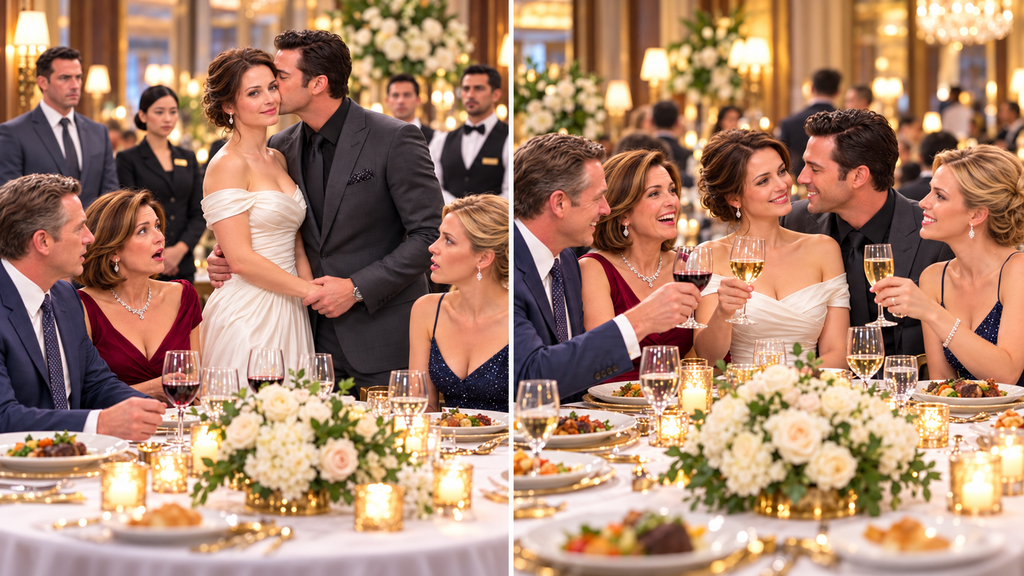
It was fear.
For the first time in thirty-four years, my father looked at me as though I were someone he couldn’t control.
He stared at the document lying between us, then slowly raised his head.
“This has to be some kind of joke.”
I folded my hands in my lap.
“No, Dad. It’s not a joke.”
My mother snatched the folder from him.
She adjusted her reading glasses and examined the first page.
Then the second.
Then the signature at the bottom.
Her lips parted.
“Giovanni Strategic Holdings?”
“That’s my company,” I said.
Vanessa leaned across the table.
“Since when do you own a company?”
“Since before you started telling everyone I was unemployed.”
Marcus sat beside me, his hand resting gently against the back of my chair.
He didn’t interrupt.
He didn’t need to.
For years, my family had believed my silence meant weakness.
Tonight, they were beginning to understand that silence could also mean patience.
My father pushed the contract away.
“So what? You own the building. Congratulations. Are we supposed to bow?”
“No,” I answered. “You’re supposed to stop insulting me.”
Mother gave a short, bitter laugh.
“Oh, please. One successful investment and suddenly you think you’re better than your family?”
I looked directly at her.
“That’s interesting, Mom.”
“What is?”
“For seven years, you’ve measured my worth by what I didn’t have. No children. No expensive clothes. No husband you knew about. No job you respected.”
I paused.
“Now that you know what I do have, you’re accusing me of measuring people by money.”
Her expression tightened.
“Don’t twist my words.”
“I’m repeating them.”
Vanessa crossed her arms.
“This is ridiculous. You invited us here just to humiliate us.”
I almost laughed.
“You invited me, Vanessa.”
She opened her mouth.
Then closed it.
Because she remembered.
Three weeks earlier, my mother had called and informed me that Vanessa wanted to celebrate Valentine’s Day with a family dinner.
At first, I declined.
Mother had sighed dramatically.
“Honestly, Elena, you can’t avoid family forever. Vanessa has arranged something special. Her husband is bringing business associates. Try to dress appropriately.”
I had asked where the dinner would be.
When she named the restaurant, I nearly dropped my phone.
It was Bellissimo.
My restaurant.
Not just a restaurant in Marcus’s international group.
The flagship location occupying the historic building I had purchased two years earlier.
The place where Marcus and I had celebrated our first profitable quarter.
The place where he had proposed.
And the place where, unbeknownst to my family, I had approved a major renovation only six months before.
I had considered telling Mother.
Instead, I asked one question.
“Does Vanessa know who owns it?”
Mother laughed.
“Don’t be silly. It’s one of the most exclusive restaurants in the city. People like us are fortunate to get a reservation.”
People like us.
I remembered those words now as I watched my mother stare at the corporate seal on the document.
My father reached for his wine.
His hand trembled slightly.
“Fine,” he muttered. “You’re successful. We understand.”
“No,” I said quietly. “I don’t think you do.”
Marcus glanced at me.
“Elena.”
I turned toward him.
His expression was gentle.
“You don’t have to explain yourself.”
“I know.”
And that was exactly why I wanted to.
Not because I needed their approval.
But because I was tired of allowing them to rewrite my life.
My mother leaned forward.
“Then perhaps you can explain why you’ve hidden your marriage from us.”
The question hung between us.
For a moment, I looked down at my wedding ring.
A simple platinum band.
No enormous diamond.
No display of wealth.
Just the ring Marcus had slipped onto my finger beneath an olive tree overlooking the Italian coast.
“You knew I was seeing someone,” I said.
“Some chef,” Mother replied dismissively.
Marcus’s jaw tightened.
I touched his hand.
“Yes. A chef.”
“You never told us you got married!”
“I sent invitations.”
My father’s head snapped toward me.
“What?”
“Three years ago. I sent invitations to both of you.”
Mother shook her head.
“No. You didn’t.”
“I did.”
Vanessa suddenly became very still.
I noticed.
So did Marcus.
I turned toward my sister.
“Vanessa?”
She reached for her glass.
“What?”
“Do you remember the invitations?”
Her fingers tightened around the stem.
“Why would I?”
I watched her face.
And suddenly, a memory surfaced.
Three years earlier, I’d called Mother to ask whether she had received a package.
She told me she hadn’t.
Then Vanessa called that evening.
She sounded irritated.
“Mom says you’re making a big deal about some party in Italy.”
“It isn’t a party,” I’d said. “It’s important.”
“Well, people have lives, Elena. You can’t expect everyone to fly across the world because you’re dating some restaurant guy.”
I remembered the sting.
I remembered deciding not to beg.
And I remembered standing beneath that olive tree with Marcus, surrounded by the people who had actually shown up.
Now, watching Vanessa avoid my eyes, I felt something cold settle in my stomach.
“You received them,” I whispered.
She looked away.
“Don’t start.”
“Vanessa.”
Mother frowned.
“What is she talking about?”
I stared at my sister.
“Did you take our wedding invitations?”
Vanessa laughed too quickly.
“Oh, for heaven’s sake.”
“Answer me.”
She slammed her glass down.
“Fine! Yes! I saw the invitations!”
My mother went rigid.
“You told me they were promotional brochures.”
Vanessa’s face turned red.
“Because she was being ridiculous! She wanted everyone to fly to Italy for some wedding to a man none of us knew!”
I felt Marcus’s hand close around mine.
My throat tightened.
“You threw them away?”
Vanessa looked at me defiantly.
“I saved everyone the trouble.”
For several seconds, I couldn’t speak.
I had spent three years believing my parents had deliberately ignored my wedding.
I had told myself I was strong enough not to care.
I had smiled through anniversaries.
I had reassured Marcus that it didn’t matter.
But now I understood.
My family hadn’t simply failed to attend.
My sister had stolen the opportunity for them to choose.
And my parents had never bothered to ask me directly.
Mother turned toward Vanessa.
“You told us Elena wasn’t serious about that man.”
Vanessa shrugged.
“Well, how was I supposed to know he’d become a billionaire?”
The words were so revealing that even my father looked embarrassed.
Marcus leaned forward.
“You weren’t supposed to know.”
Vanessa blinked.
“What?”
“You weren’t supposed to know whether I’d become wealthy.”
His voice remained calm.
“You were supposed to care that your sister was happy.”
Nobody answered.
Then Marcus said something that made my chest ache.
“When Elena married me, I wasn’t wealthy enough to impress your family. I was still working eighteen-hour days, trying to keep our restaurants profitable.”
He looked at Vanessa.
“She married the man. Not the balance sheet.”
I swallowed hard.
Because he was right.
And because I suddenly remembered the night we decided to marry.
Marcus had been standing in our tiny apartment kitchen, wearing an old T-shirt with flour on the sleeve.
He had burned the garlic bread.
The pasta was overcooked.
And when he opened the little velvet box, his hands were shaking.
“I can’t promise you a perfect life,” he’d said.
I had laughed through my tears.
“Good. I don’t want a perfect life.”
“What do you want?”
“You.”
He had kissed me before I finished speaking.
And somehow, that small kitchen had felt more luxurious than any palace.
Now we were sitting inside a restaurant worth millions, and the people who should have celebrated that love were arguing about money.
My father cleared his throat.
“Vanessa shouldn’t have done that.”
I looked at him.
It was the closest he’d come to defending me all evening.
Then he ruined it.
“But that’s in the past. We’re here now. We should focus on moving forward.”
Of course.
Moving forward.
The phrase my parents used whenever they wanted me to forget something without receiving an apology.
I leaned back.
“Before we move forward, there’s something else I want to understand.”
Vanessa rolled her eyes.
“What now?”
“The boutique hotel.”
Her expression changed immediately.
“What about it?”
“You said you needed almost half a million dollars.”
“Yes.”
“For what?”
“Startup expenses.”
“Which expenses?”
She hesitated.
“Renovations. Staffing. Marketing.”
“Have you purchased a property?”
“We’re negotiating.”
“With whom?”
Her husband, Richard, who had remained unusually quiet throughout the evening, finally spoke.
“Elena, I don’t think this is the appropriate time to discuss our business.”
I turned toward him.
“Then perhaps it wasn’t appropriate to ask me to finance it.”
Richard adjusted his tie.
He was a handsome man in his early forties, always impeccably dressed, always carrying himself with the confidence of someone who wanted everyone to believe he was successful.
For years, Vanessa had held him up as proof that she’d made better choices than I had.
Richard owned a consulting firm.
Or at least, that’s what everyone believed.
He drove a luxury SUV.
He wore expensive watches.
He talked constantly about investments.
But I had spent enough years studying financial statements to recognize a man who loved the appearance of success more than the discipline required to achieve it.
I looked at him carefully.
“What’s the name of your hotel company?”
He smiled.
“Whitmore Hospitality Ventures.”
“Interesting.”
“Why?”
“Because that company applied for financing through one of our investment partners last month.”
Richard’s smile disappeared.
Vanessa looked between us.
“What?”
I reached for my phone.
“I remember the application.”
Marcus glanced at me.
“Elena, are you sure?”
I nodded.
“Very.”
Richard straightened.
“That’s confidential information.”
“Which is why I’m not going to disclose anything from the application,” I replied. “But I can tell you this: I’m not investing in your business.”
Vanessa’s face twisted.
“You haven’t even heard our proposal!”
“I’ve heard enough to know I need independently verified financial statements before considering anything. And I’m not interested in mixing family pressure with investment decisions.”
Richard pushed back his chair.
“This is insulting.”
I looked at him.
“Then withdraw the request.”
He didn’t.
Instead, he looked at my father.
“Arthur, perhaps you can talk some sense into your daughter.”
My father nodded immediately.
“Elena, you’ve made your point. Help your sister. You can afford it.”
I stared at him.
“Dad, do you know what Marcus and I did when we couldn’t afford our first restaurant’s rent?”
He frowned.
“What does that have to do with anything?”
“We worked.”
Marcus smiled faintly.
I continued.
“We sold our second car. We canceled our honeymoon. We slept four hours a night. We washed dishes when the dishwasher broke.”
Vanessa scoffed.
“And now you’re rich. Congratulations.”
“No,” I said. “Now we’re responsible for thousands of employees who depend on us to make intelligent decisions.”
I leaned forward.
“I’m not giving you half a million dollars because you think being my sister makes you entitled to it.”
Mother slapped the table.
“Enough!”
Several guests in the nearby dining room turned their heads.
The private dining room doors were partly open.
My mother lowered her voice.
“You’re embarrassing this family.”
I looked around at the beautiful chandeliers, the polished silverware, the white roses arranged along the table.
Then I looked at Marcus.
He gave me the smallest nod.
I turned back to Mother.
“No, Mom.”
My voice was steady.
“For the first time in my life, I’m refusing to be embarrassed by this family.”
And that was when Richard’s phone began to ring.
He glanced at the screen.
His face went pale.
He rejected the call.
Three seconds later, it rang again.
Vanessa frowned.
“Who is that?”
“Nobody.”
The phone rang a third time.
Marcus looked at the screen before Richard turned it over.
Something flickered across my husband’s expression.
Recognition.
Concern.
And then a sudden, unsettling understanding.
Marcus leaned toward me.
“Elena,” he whispered. “We need to talk.”
I looked at him.
“About what?”
His eyes moved toward Richard.
“About the reason he really wanted this dinner.”
I had known Marcus for seven years.
I knew the difference between his business smile and his genuine one.
I knew when he was tired, even when he insisted he wasn’t.
I knew that when something worried him, he rubbed the inside of his left wrist with his thumb.
He was doing that now.
My stomach tightened.
“What is it?” I whispered.
“Not here.”
Across the table, Richard stood abruptly.
“I need to take this.”
He hurried toward the hallway.
Vanessa watched him go.
Then she looked at me.
“What did you say to him?”
“Nothing.”
“You’ve been interrogating him all night!”
“I asked basic questions about a business he wants me to finance.”
Mother sighed.
“This is exactly what I mean when I say you’re difficult.”
I almost smiled.
There it was again.
That word.
Difficult.
The label they’d given me when I was twelve and refused to apologize for something I hadn’t done.
The label they’d used when I was seventeen and chose a scholarship instead of attending the university my father preferred.
The label Mother repeated when I turned down a job at one of Dad’s friend’s companies because I wanted to study financial strategy.
And the label Vanessa used whenever I refused to lend her money.
Difficult.
For years, I had carried that word like a bruise.
Tonight, for the first time, it sounded different.
Marcus stood.
“Excuse us for a moment.”
My father frowned.
“Where are you going?”
“To speak privately with my wife.”
Marcus offered me his hand.
I took it.
As we walked toward the hallway, I heard Vanessa mutter something about rich people being arrogant.
Marcus didn’t react.
But once we reached the quiet corridor beside the wine cellar, he turned toward me.
“Elena, I need to ask you something.”
“What?”
“Did Richard tell you which property he wants to purchase?”
“No.”
Marcus exhaled.
“That’s what I was afraid of.”
I felt a cold sensation move through my chest.
“Marcus.”
He took out his phone.
“Three weeks ago, our development division received an inquiry about purchasing a distressed boutique hotel in Florence.”
I frowned.
“Florence?”
“Yes.”
“We already reviewed that property.”
“I know.”
I remembered the building immediately.
A historic hotel near the river.
Beautiful architecture.
Terrible financial performance.
A complicated ownership structure.
And several unresolved liabilities that made the acquisition far riskier than its photographs suggested.
I had rejected the deal six months earlier.
The numbers simply didn’t work.
“What does that have to do with Richard?”
Marcus hesitated.
“His company has been presenting itself as a potential buyer.”
I stared at him.
“Whitmore Hospitality Ventures?”
He nodded.
“But that’s not the problem.”
“What is?”
Marcus showed me an email.
The subject line read:
CONFIDENTIAL — GIOVANNI GROUP STRATEGIC PARTNERSHIP CONFIRMATION
My pulse quickened.
I read the message.
Then read it again.
Richard had apparently told the seller that his company had secured strategic backing from Giovanni Global Hospitality.
Our company.
He had attached a letter bearing our corporate logo.
And beneath the letter was a signature.
Mine.
I stared at it.
For a moment, the corridor seemed to tilt.
“That isn’t my signature.”
“I know.”
I enlarged the image.
The handwriting resembled mine.
The curve of the E.
The sharp upward line in the last name.
Even the little flourish I sometimes added beneath formal documents.
But something was wrong.
The signature had been copied from an older document.
I recognized the exact version.
It came from a contract I had signed almost four years earlier.
My hands turned cold.
“Where did he get this?”
Marcus’s expression darkened.
“That’s what our legal team is investigating.”
I looked back toward the dining room.
Through the glass panel, I could see my mother laughing nervously.
My father was pouring more wine.
Vanessa was checking her phone.
A normal family dinner.
Except nothing about this evening was normal anymore.
“Richard forged my signature?”
“We don’t know who created the letter,” Marcus said carefully. “But it was circulated without authorization.”
I swallowed.
“Does Vanessa know?”
“I don’t know.”
Then another thought struck me.
“Marcus, why didn’t you tell me about this?”
He looked genuinely pained.
“Because our compliance team flagged it this afternoon, while I was finalizing the aircraft arrangements. I wanted to verify the facts before bringing you an accusation involving your family.”
I looked at the date on the email.
Three days earlier.
The letter had already been used.
I felt anger rise.
Not the hot, reckless kind.
Something colder.
More focused.
The kind of anger that had helped me survive boardrooms full of men who assumed I didn’t understand financial statements.
I handed the phone back.
“Call legal.”
“Already done.”
“Tell them to preserve everything.”
“They are.”
“And Marcus?”
“Yes?”
“Don’t let anyone destroy the original correspondence.”
His expression softened.
“That’s my girl.”
I shook my head.
“No.”
He frowned.
“What?”
“Not your girl tonight.”
I straightened my shoulders.
“Your chief financial strategist.”
Marcus smiled.
And for the first time since dinner began, I saw the man who had once trusted me with his last remaining hope.
“Then tell me what you want to do.”
I looked toward the dining room.
“We’re going back inside.”
Richard had returned to the table by the time we entered.
He was smiling again.
Too broadly.
Too deliberately.
I recognized that smile.
It was the expression people wore when they believed they had successfully hidden something.
Vanessa was whispering in his ear.
When she saw us, she sat upright.
“There you are.”
I returned to my chair.
Marcus sat beside me.
My father cleared his throat.
“Now that everyone’s back, I think we should start over.”
I looked at him.
“Start over?”
“Yes. Put this unpleasantness behind us.”
Mother nodded.
“Exactly. It’s Valentine’s Day. We should celebrate love, not argue about money.”
I almost admired the speed with which she could rewrite reality.
An hour earlier, she’d told me no man would ever want me.
Now she wanted to celebrate love.
I reached for my water.
“Actually, Dad, there’s something I’d like Richard to explain.”
His smile faltered.
“What?”
“The Florence hotel.”
Silence.
Vanessa blinked.
“How do you know about that?”
I kept my eyes on Richard.
“Because my company reviewed it.”
Richard gave a small laugh.
“Lots of companies review international properties.”
“That’s true.”
I leaned forward.
“Did you tell the seller that Giovanni Global Hospitality was financing your acquisition?”
His expression changed.
Only slightly.
But enough.
“I may have mentioned that we were exploring strategic partnerships.”
“Did you provide a letter of financial support?”
Vanessa looked at him.
“Richard?”
He ignored her.
“Elena, business negotiations are complicated. Sometimes preliminary documents are circulated before formal agreements are finalized.”
“Was there a formal agreement?”
“No, but—”
“Did you have authorization to use our company name?”
He looked at Marcus.
“Perhaps we should discuss this privately.”
Marcus’s voice was calm.
“My wife asked you a question.”
Richard swallowed.
“I believed we had a mutual understanding.”
“With whom?” I asked.
He hesitated.
Then he looked at Vanessa.
My sister’s face drained of color.
I felt my heart sink.
“Vanessa?”
She shook her head.
“Don’t look at me.”
Richard spoke quickly.
“Your sister told me she had influence with you.”
I stared at her.
“What?”
Vanessa sat very still.
Richard continued.
“She said you were involved in Marcus’s businesses and could help secure financing.”
I felt something inside me go quiet.
Not break.
Not shatter.
Just become terribly, terribly still.
“Vanessa,” I said, “how long have you known about my business?”
She looked down.
“Not everything.”
“How long?”
“Maybe a year.”
Mother turned sharply.
“A year?”
Vanessa’s eyes filled with tears.
“I found an article online!”
I waited.
She continued.
“It mentioned Elena as a founding investor. I didn’t know she was married to Marcus. I thought maybe they were business partners.”
I stared at her.
“You knew I was successful.”
She nodded reluctantly.
“And you kept telling our parents I was unemployed.”
“I never said unemployed!”
“You said I didn’t have a real career.”
“That isn’t the same thing!”
My father looked furious.
“Vanessa, why didn’t you tell us?”
She snapped.
“Because you never asked!”
The words hit the table like a thrown plate.
For once, my sister had accidentally told the truth.
Nobody had asked.
Not about my work.
Not about my happiness.
Not about the man I loved.
They had simply decided who I was and punished me whenever I failed to fit their version.
Richard cleared his throat.
“Look, this is getting out of hand.”
I turned toward him.
“No. What’s getting out of hand is the unauthorized use of my signature.”
His face went white.
Vanessa stared.
“What signature?”
I didn’t answer her.
I looked at Richard.
“Did you sign my name?”
He opened his mouth.
Closed it.
Then said, “I didn’t personally sign anything.”
A carefully chosen sentence.
I knew immediately.
“Who did?”
He looked away.
“Richard.”
“I don’t know.”
“Then you should be very concerned about the documents being circulated on behalf of your company.”
He stood abruptly.
“I won’t sit here and be accused of a crime.”
“Then sit down and explain the facts.”
My voice wasn’t loud.
It didn’t need to be.
For a moment, he seemed ready to shout.
Then his phone vibrated again.
He glanced at the screen.
And whatever courage he’d gathered disappeared.
“I need to leave.”
Vanessa grabbed his arm.
“Richard, what’s happening?”
“Nothing.”
“Then why are you shaking?”
He looked at her.
“Get your coat.”
I watched him.
“Running away won’t fix this.”
He turned toward me.
His expression had changed.
The polished charm was gone.
In its place was something ugly.
“You think you’re so clever, Elena.”
Marcus straightened.
“Careful.”
Richard ignored him.
“You sit there with your money and your husband and act like you’re better than everyone.”
I held his gaze.
“No. I act like someone who expects you not to use my name without permission.”
He laughed bitterly.
“You don’t understand how business works.”
I looked at Marcus.
He actually chuckled.
Richard’s face flushed.
“What’s funny?”
Marcus shook his head.
“Of all the things you could have said to her, that was probably the least intelligent.”
Then he looked at me.
“Sweetheart, would you like me to call our attorney?”
I nodded.
“Yes.”
Richard’s chair scraped across the floor.
“You’ll regret this.”
I looked at him.
“No, Richard.”
I took a slow breath.
“I think I’ve spent enough years regretting what I didn’t say.”
The first real crack in Vanessa’s marriage appeared less than ten minutes later.
Richard had stormed out.
Vanessa remained behind, crying angry tears and insisting I had deliberately humiliated her husband.
My mother was furious.
My father kept checking his phone.
Marcus had stepped into the corridor to speak with our legal counsel.
And I sat quietly, watching the people who had once seemed enormous in my life become painfully ordinary.
Mother finally spoke.
“You could have handled this differently.”
I looked at her.
“How?”
“Privately.”
“Richard asked me for money in front of everyone.”
“That doesn’t mean you had to interrogate him.”
“Mom, someone used my signature on a financial document.”
She waved a hand.
“Maybe it was a misunderstanding.”
I stared at her.
“A misunderstanding?”
“People make mistakes.”
“Would you say that if someone used Vanessa’s signature?”
Mother’s mouth tightened.
“Don’t compare yourself to your sister.”
There it was.
Again.
I felt an old ache rise from somewhere deep in my chest.
I remembered being fourteen.
Vanessa had borrowed my favorite necklace without permission and broken the clasp.
When I complained, Mother told me not to be selfish.
I remembered being nineteen.
I’d received a scholarship to a prestigious university.
Vanessa had failed an important exam the same week.
Mother asked me not to mention my scholarship at dinner because it would make my sister feel bad.
I remembered being twenty-six.
I’d received my first major promotion.
At the family celebration, Mother spent forty minutes talking about Vanessa’s engagement.
When I finally mentioned my promotion, Dad said, “That’s nice, sweetheart,” without looking up from his plate.
I remembered all of it.
Not because I enjoyed holding grudges.
But because repeated wounds leave patterns.
And sometimes you don’t recognize the pattern until you stop making excuses for the people who caused it.
I looked at Mother.
“Why?”
She frowned.
“Why what?”
“Why have you always treated Vanessa like she matters more?”
My father sighed.
“Elena, don’t start this nonsense.”
I ignored him.
“I’m asking Mom.”
Mother stiffened.
“I love both my daughters equally.”
“No, you don’t.”
Her eyes widened.
“How dare you?”
“I’m not saying you don’t love me. I’m saying you’ve never treated us equally.”
Vanessa sniffed.
“Oh, here we go. Poor Elena. Always the victim.”
I turned toward her.
“Do you remember my graduation?”
She rolled her eyes.
“What about it?”
“You told Mom you had a migraine.”
“I did.”
“And Mom stayed home with you.”
“So?”
“Dad stayed too.”
Father shifted uncomfortably.
I looked at him.
“I was the first person in our family to graduate with honors. I stood on that stage and searched the audience for you.”
He stared at the table.
“You knew we couldn’t make it.”
“I knew what you told me.”
My voice began to tremble.
“I didn’t know until later that Vanessa went shopping that afternoon.”
Vanessa’s face hardened.
“You’re bringing up something from fifteen years ago?”
“Yes.”
“That’s pathetic.”
I nodded slowly.
“Maybe it is.”
My eyes burned.
“But I remember sitting on the steps outside the auditorium with my diploma in my lap, watching everyone else take photographs with their families.”
Nobody spoke.
“I remember telling myself I was being childish. That I shouldn’t care. That I was old enough to celebrate alone.”
I swallowed.
“Do you know who took my graduation photograph?”
Mother looked away.
“The janitor.”
The word hung in the air.
“He saw me trying to take a picture of myself. He asked where my family was. I told him they were running late.”
My voice cracked.
“They weren’t coming.”
I hadn’t planned to say any of this.
I’d imagined tonight would be satisfying.
Maybe even funny.
My family would discover I was wealthy.
They would look shocked.
I would leave for Paris with Marcus.
End of story.
But the truth was messier.
Because underneath all the success, underneath the contracts and restaurants and millions of dollars, there was still a young woman standing outside an auditorium with a diploma and nobody to hug her.
Mother’s eyes filled with tears.
“Elena…”
I shook my head.
“Please don’t tell me you didn’t know.”
She lowered her gaze.
“I didn’t realize it hurt you that much.”
I gave a small, broken laugh.
“You never asked.”
Marcus returned just as my father pushed back his chair.
“I think we’ve all had enough.”
He looked exhausted.
Older than he had when dinner began.
I almost felt sorry for him.
Almost.
Then he said, “Elena, your mother is upset. You should apologize.”
Something inside me finally settled.
Not anger.
Not resentment.
Clarity.
“No.”
He stared.
“What did you say?”
“I said no.”
His jaw tightened.
“I’m your father.”
“I know.”
“You will not speak to me like that.”
I stood slowly.
For years, that tone had frightened me.
Even as an adult, I had felt twelve years old whenever he used it.
But tonight, I looked at him and saw a man who had mistaken obedience for respect.
“Dad, I love you,” I said. “But being my father doesn’t give you the right to demand apologies when I’m the one who’s been hurt.”
He opened his mouth.
I continued.
“You don’t have to agree with me. You don’t even have to understand me. But you will not threaten me into silence anymore.”
His face turned red.
“Threaten you?”
“Yes.”
“I have never threatened you!”
“You threatened to stop paying my university expenses if I didn’t change my major.”
“That was for your own good!”
“You threatened not to attend my graduation if I didn’t apologize to Vanessa.”
“She was going through a difficult time!”
“You threatened to stop speaking to me when I refused to lend Richard money four years ago.”
Father fell silent.
I stepped closer.
“And every time I stood up for myself, you called me difficult.”
His expression changed.
For a second, I saw something like recognition.
Then he looked away.
Marcus came to stand beside me.
Not in front of me.
Not between me and my family.
Beside me.
Exactly where he had always stood.
My mother dabbed her eyes.
“I don’t know what you want from us.”
I thought about that.
What did I want?
An apology?
An explanation?
A childhood rewritten?
A graduation photograph with my parents smiling beside me?
None of those things could be purchased.
Not even with all the money Marcus and I had made.
“I wanted you to be happy for me,” I said finally.
My mother began to cry.
I felt tears slipping down my own cheeks.
“I wanted you to ask whether I was happy before telling me everything that was wrong with my life.”
Vanessa stared at the table.
I looked at her.
“I wanted a sister who didn’t treat my happiness like an insult.”
Then I turned toward my father.
“And I wanted a dad who could say he was proud of me without first asking what I could do for someone else.”
My father looked as though I’d struck him.
For a long moment, nobody moved.
Then he whispered, “I didn’t know.”
I wiped my cheeks.
“Yes, Dad.”
My voice was barely audible.
“That was always the problem.”
We might have ended the evening there.
I might have walked out with Marcus, boarded our plane, and spent Valentine’s Day watching the lights of Paris glitter beneath us.
But at 9:17 p.m., the restaurant manager entered the private dining room.
His name was Thomas.
He had worked with Marcus for six years.
He was the kind of man who could remember a guest’s favorite wine after a single visit and solve a kitchen crisis without raising his voice.
Tonight, however, he looked deeply uncomfortable.
“Mrs. Giovanni?”
I turned.
“Yes, Thomas?”
“I’m sorry to interrupt, but there’s someone asking to speak with you.”
“Who?”
He hesitated.
“A woman named Caroline Whitmore.”
Vanessa went completely still.
My father frowned.
“Whitmore?”
Richard’s last name.
I looked at Thomas.
“Did she say why?”
“She said it concerns her brother.”
Vanessa’s face turned white.
“Richard doesn’t have a sister.”
Thomas glanced at me.
The silence that followed felt strangely heavy.
I turned toward Vanessa.
“Are you sure?”
She nodded quickly.
“Of course I’m sure. We’ve been married eleven years.”
Thomas cleared his throat.
“The woman is carrying identification. She asked me to tell you that her name used to be Caroline Reed.”
Marcus looked at me.
I looked back at him.
Neither of us recognized the name.
But Vanessa did.
I knew because she whispered one word.
“No.”
I turned toward her.
“Vanessa?”
She stood so quickly her chair nearly fell.
“We need to leave.”
Mother reached for her.
“Darling, what’s wrong?”
“Nothing. We’re leaving.”
I looked at Thomas.
“Please ask Ms. Whitmore to wait in the lounge.”
Vanessa grabbed my wrist.
“Elena, don’t.”
I stared at her hand.
She released me.
“Please,” she whispered.
It was the first time that evening my sister had said that word without asking for money.
And the fear in her eyes was real.
“What are you afraid of?” I asked.
She shook her head.
“Richard told me she was dead.”
Caroline Whitmore was forty-six years old, with tired blue eyes and dark hair streaked with gray.
She wore a simple wool coat.
No expensive jewelry.
No designer handbag.
Nothing about her suggested wealth.
But she walked into the private dining room with the steady composure of someone who had spent years preparing for a difficult conversation.
Vanessa stared at her.
Caroline stopped.
For a moment, neither woman spoke.
Then Caroline said quietly, “Hello, Vanessa.”
My sister covered her mouth.
Mother looked bewildered.
“Who is this?”
Caroline turned toward her.
“My name is Caroline. Richard is my younger brother.”
My father frowned.
“Richard told us his family lived overseas.”
Caroline gave a sad smile.
“Richard tells people many things.”
I pulled out a chair.
“Would you like to sit?”
“Thank you.”
She sat.
Thomas brought her water.
I waited until he’d left.
Then I asked, “How did you know we were here?”
Caroline glanced at Vanessa.
“Your husband called me.”
Marcus and I exchanged a look.
“Richard?”
She nodded.
“He called twenty minutes ago. He was furious. He said your family was threatening to destroy him.”
Vanessa whispered, “Why would he call you?”
Caroline’s eyes softened.
“Because he wants something from me.”
“What?”
“A document.”
I felt the familiar tightening in my stomach.
“What kind of document?”
Caroline reached into her handbag.
She withdrew a brown envelope.
It was worn around the edges.
She placed it on the table.
“My brother has been trying to purchase a hotel in Florence.”
I nodded.
“We know.”
“He can’t complete the transaction without proof of funds.”
“That’s correct.”
“He told me he had a wealthy investor.”
Caroline looked directly at me.
“He said the investor was his wife’s sister.”
My mother gasped.
Vanessa shook her head.
“I didn’t know he was saying that.”
Caroline continued.
“When I asked whether the investor had agreed, Richard told me it was only a matter of time.”
I leaned forward.
“What did he want from you?”
Caroline opened the envelope.
Inside were several pages.
“He wanted me to sign a statement confirming that our late father’s estate had provided collateral for his company.”
My father frowned.
“Did it?”
“No.”
She slid the papers toward me.
“Our father died eight years ago. He left us a small house and some savings. Richard sold his share of the property years ago.”
I examined the documents.
The proposed collateral statement contained several inconsistencies.
Dates that didn’t align.
Assets described in ways that made no sense.
A valuation far higher than Caroline’s description suggested.
I looked up.
“Did you sign?”
“No.”
“Why?”
“Because I’ve signed things for Richard before.”
Her voice changed.
Became quieter.
“And every time, he promised it was harmless.”
Vanessa sank into her chair.
Caroline looked at her.
“I’m sorry.”
My sister shook her head.
“No.”
“Vanessa—”
“No. I don’t want to hear this.”
Caroline’s eyes filled.
“I tried to warn you.”
Vanessa stared.
“When?”
“Before your wedding.”
My mother looked stunned.
“You contacted her?”
Caroline nodded.
“I wrote a letter. I asked her to call me before marrying Richard.”
Vanessa whispered, “I never received a letter.”
Caroline frowned.
“I mailed it to your parents’ address.”
Slowly, everyone’s eyes moved toward my mother.
Her expression changed.
Not dramatically.
Just enough.
I felt my stomach drop.
“Mom?”
She stared at Caroline.
“I remember a letter.”
Vanessa turned toward her.
“What?”
Mother swallowed.
“A woman wrote to us. She said some very unpleasant things about Richard.”
Caroline nodded.
“I wrote that he had left unpaid debts in two previous business ventures and that he had lied to his former fiancée about his finances.”
Vanessa’s lips parted.
Mother looked down.
“I thought she was trying to ruin the wedding.”
My sister stared at her.
“You didn’t tell me?”
Mother began to cry.
“I was trying to protect you.”
Vanessa stood.
“Protect me?”
“Darling—”
“You let me marry him!”
Mother reached for her.
Vanessa stepped away.
“You knew someone was warning me about my husband, and you threw the letter away?”
Mother’s voice shook.
“I didn’t know whether it was true!”
“Then why didn’t you let me decide?”
The words struck me with almost physical force.
Because I’d asked myself the same question about my wedding invitations.
Two sisters.
Two stolen letters.
Two lives altered by people who believed they had the right to make decisions for us.
I looked at Vanessa.
For the first time that evening, I didn’t see the smug older sister who had spent years belittling me.
I saw a frightened woman whose carefully constructed life was beginning to collapse.
And despite everything, my heart hurt for her.
Caroline stayed for another twenty minutes.
She explained what she knew.
Not rumors.
Not guesses.
Documents.
Richard had previously operated two small hospitality ventures.
Both had failed.
In one case, creditors had pursued him for unpaid obligations.
In another, a business partner had accused him of misrepresenting investment commitments.
Caroline was careful to distinguish allegations from established facts.
I appreciated that.
She wasn’t there to destroy her brother.
She was there because she was tired of being asked to rescue him.
“He can be charming,” she said quietly. “When Richard wants something, he makes you feel like you’re the only person who can save him.”
Vanessa stared at her hands.
“He told me he was self-made.”
Caroline’s expression softened.
“He’s always wanted to be.”
My father looked sick.
He had praised Richard for years.
Called him ambitious.
Disciplined.
A real businessman.
He’d once told me, “You could learn something from your brother-in-law.”
I remembered that now.
And judging by the way Dad avoided my eyes, so did he.
Caroline turned toward me.
“I don’t know whether Richard created the letter using your company’s name. But I know he was desperate to make the Florence deal appear secure.”
I nodded.
“Thank you for coming.”
She hesitated.
“There’s something else.”
I felt Marcus become still beside me.
“What?”
Caroline looked at Vanessa.
“Richard borrowed money against your house.”
My sister blinked.
“What?”
Caroline’s voice was gentle.
“He told me he’d arranged a secured loan using the property you own together.”
Vanessa shook her head.
“No.”
“I don’t know the details. You need to check the records.”
“No,” Vanessa repeated. “That’s impossible.”
She looked at me.
Then at our parents.
“Our house is paid off.”
My father frowned.
“I helped you pay off the mortgage last year.”
Vanessa nodded desperately.
“Exactly!”
Caroline lowered her eyes.
“I’m sorry.”
For a moment, Vanessa simply sat there.
Then she reached for her phone.
Her fingers were shaking so badly she could barely unlock it.
She called Richard.
Once.
Twice.
Three times.
No answer.
She sent a message.
Then another.
Finally, she looked up.
“He’s not answering.”
I felt the room grow painfully quiet.
My mother began to sob.
My father stared at the wall.
And Vanessa, who had spent years presenting her marriage as proof of her superiority, looked as though she had suddenly forgotten how to breathe.
I moved closer.
“Vanessa.”
She shook her head.
“Don’t.”
“Listen to me.”
“No!”
She stood.
“Don’t you dare feel sorry for me!”
I stopped.
She pointed at me.
“You’ve been waiting for this!”
I stared at her.
“What?”
“You’ve always been jealous of me!”
The accusation was so absurd that I couldn’t speak.
Vanessa’s voice rose.
“You hated that Mom and Dad loved me! You hated that I got married first! You hated that I had children!”
Tears streamed down her cheeks.
“And now you finally get to sit there and watch my life fall apart!”
I felt Marcus move beside me.
I lifted my hand.
He stopped.
I looked at my sister.
For a moment, I considered defending myself.
Listing every insult.
Every stolen opportunity.
Every cruel joke.
Every time she’d made me feel small.
But then I saw her hands.
They were trembling.
And I remembered the little girl who used to climb into my bed during thunderstorms because she was afraid of lightning.
I remembered Vanessa before competition became the language of our family.
Before our parents turned every achievement into a contest.
Before she learned that being loved meant being better than someone else.
I spoke softly.
“Vanessa, I never wanted your life to fall apart.”
She laughed bitterly.
“Of course not.”
“I wanted you to stop trying to tear mine apart.”
Her face changed.
I continued.
“Those are not the same thing.”
She stared at me.
Then, very slowly, she sank back into her chair.
And began to cry.
Not the dramatic tears she’d used to win arguments as a child.
Not the angry tears from earlier.
These were quiet.
Exhausted.
Terrified.
I sat beside her.
I didn’t hug her.
Not yet.
I simply placed a glass of water within reach.
Sometimes compassion doesn’t mean pretending someone hasn’t hurt you.
Sometimes it means refusing to become cruel just because cruelty would be easy.
By ten o’clock, the Valentine’s dinner had become something none of us could have imagined.
The roses still decorated the table.
The candles still flickered.
Soft piano music drifted through the dining room.
But the celebration was over.
Caroline had left after giving Vanessa her contact information.
Marcus’s legal team had begun reviewing the unauthorized financing letter.
Richard was no longer answering anyone’s calls.
And my sister was sitting beside me, staring at a message from her bank.
She had accessed her property records through an online account.
There was, indeed, a recently recorded loan secured against the house.
The amount was staggering.
Four hundred and twenty thousand dollars.
Vanessa looked up at me.
Her lips trembled.
“I didn’t sign anything.”
I kept my voice calm.
“Then we need to find out how it happened.”
She swallowed.
“Can he take our house?”
“Not automatically. We need an attorney to examine the documents, the loan terms, and whether any signatures were authorized.”
She nodded, barely listening.
“I’m going to lose everything.”
“Vanessa.”
She looked at me.
“Don’t decide that before you know the facts.”
Her eyes filled again.
For years, she’d told everyone I was cold.
Unemotional.
Too practical.
Now those same qualities were helping me keep her from falling apart.
My father approached us.
“Elena.”
I looked up.
He cleared his throat.
“Can you fix this?”
The question hurt more than I expected.
Not because he was asking for help.
But because even now, with everything exposed, his first instinct was to ask what I could do.
I stood.
“Dad, I can help Vanessa find qualified legal advice. I can help her understand the financial documents. But I can’t promise to make every consequence disappear.”
He frowned.
“But you have connections.”
“Yes.”
“And money.”
“Yes.”
“Then what’s the problem?”
I stared at him.
“The problem is that money doesn’t make forged documents legitimate. It doesn’t replace an investigation. And it doesn’t give me the right to interfere with a lender’s legal process.”
He looked frustrated.
“So you’re refusing to help your sister?”
“No.”
I took a breath.
“I’m refusing to confuse helping with rescuing.”
My father fell silent.
I continued.
“If Vanessa wants my help, she can ask me herself.”
He looked toward her.
She was watching us.
For a long moment, she said nothing.
Then she stood.
Her voice was barely a whisper.
“Elena?”
I turned.
“Yes?”
“Will you help me find out what happened?”
I nodded.
“Yes.”
Her shoulders collapsed.
“But I need you to understand something,” I added.
She looked up.
“I will help you get the truth. I will not finance Richard’s business. I will not cover up anything illegal. And I will not let you use this crisis to erase the way you’ve treated me.”
She closed her eyes.
Then nodded.
“I understand.”
I wasn’t sure she truly did.
But it was a beginning.
At 10:26 p.m., Marcus approached me with his phone.
“Elena, we need to make a decision about Paris.”
I blinked.
For the first time in nearly an hour, I remembered the plane.
The beautiful suite he’d booked.
The dinner reservation overlooking the Seine.
The weekend we’d planned to spend doing absolutely nothing except being together.
My chest tightened.
“Oh, Marcus.”
He smiled gently.
“We can leave tomorrow.”
I shook my head.
“No.”
He frowned.
“Sweetheart—”
“You planned this for months.”
“Paris isn’t going anywhere.”
I looked toward Vanessa.
She was speaking quietly with Caroline on the phone.
My mother sat beside her.
My father stood near the window, looking defeated.
For the first time in my life, my family needed me in a way that had nothing to do with their assumptions about my worth.
And a familiar instinct rose inside me.
Stay.
Fix everything.
Make everyone comfortable.
Sacrifice what matters to you.
I recognized it immediately.
It was the same instinct that had kept me attending family dinners where I was insulted.
The same instinct that made me answer Mother’s calls even when I knew she’d spend twenty minutes criticizing my life.
The same instinct that had once convinced me love had to be earned through usefulness.
I looked at Marcus.
He was watching me carefully.
Not pressuring.
Not deciding.
Waiting.
“What do you think?” I asked.
He took my hand.
“I think your sister needs a lawyer. Your parents need time to process what they’ve learned. And you need a husband who remembers that tonight was supposed to be about us.”
I laughed softly.
Tears filled my eyes.
He brushed one away.
“You can care about your family without surrendering your marriage to their emergencies.”
I swallowed.
“I know.”
“Do you?”
I looked at him.
And realized I was still learning.
I turned toward Vanessa.
“Vanessa?”
She ended her call.
“What?”
“I’m going to arrange for an independent attorney to contact you tomorrow morning. You should preserve all documents, avoid signing anything new, and contact the lender through its verified number.”
She nodded.
“Okay.”
“I’ll also ask our legal team to coordinate on the unauthorized use of our company name, while keeping your personal legal matters separate.”
“Thank you.”
I hesitated.
“Marcus and I are leaving tonight.”
My mother looked up sharply.
“Leaving?”
“Yes.”
“But your sister—”
“Has a phone, a home, and an attorney she can speak with tomorrow.”
Mother stared at me.
“Elena, surely you can postpone a vacation.”
I felt the old guilt reach for me.
Then Marcus squeezed my hand.
I looked at Mother.
“No.”
She blinked.
“What?”
“No, Mom. I’m not postponing my life because you’ve decided my happiness is less urgent than everyone else’s problems.”
Her mouth opened.
Then closed.
I turned to Vanessa.
“Do you need immediate medical help or somewhere safe to stay tonight?”
She shook her head.
“No. The children are with Richard’s mother. I’m going to pick them up.”
“Do you want Dad to go with you?”
She nodded.
“Yes.”
I looked at my father.
He straightened.
“Of course.”
“Good.”
Then I reached for my coat.
For the first time in my life, I was leaving a family crisis without feeling responsible for solving every part of it.
And the strangest thing happened.
The world didn’t end.
There was one final matter.
The bill.
Thomas appeared as Marcus helped me into my coat.
“Mrs. Giovanni, would you like me to close out the private dining room?”
I looked at the table.
Eight thousand five hundred dollars.
An extravagant dinner my family had ordered while believing someone else would eventually pay.
My father approached.
“Elena, about the bill…”
I waited.
He cleared his throat.
“Given everything that’s happened, perhaps we can settle it another time.”
I looked at him.
Then at Thomas.
“Was the reservation made under my father’s name?”
“Yes, ma’am.”
“And did he approve the menu and minimum spend?”
Thomas nodded.
“He did.”
I turned toward Dad.
“Then the bill is yours.”
His face reddened.
“Elena—”
“You booked the room. You selected the menu. You ordered the wine.”
Mother stared.
“Surely you aren’t going to charge your own family!”
I looked at her.
“Mom, if I owned a clothing store and you bought a dress, would you expect to walk out without paying?”
“That’s different.”
“How?”
She couldn’t answer.
My father looked toward Marcus.
“Surely you can do something.”
Marcus smiled politely.
“I can recommend the chocolate soufflé. It’s excellent.”
Despite everything, I almost laughed.
Dad didn’t.
“This is outrageous.”
I shook my head.
“No, Dad. What’s outrageous is booking an $8,500 dinner without a plan to pay for it.”
His expression changed.
And suddenly I understood.
I looked at Vanessa.
“Who was supposed to pay?”
She avoided my eyes.
“Dad.”
I turned back to him.
“Dad?”
He swallowed.
“Richard said he had a business associate who would take care of it.”
I stared.
“What business associate?”
He hesitated.
Then said quietly, “You.”
The room became silent.
I felt my heart sink.
Not because of the money.
Because of the plan.
They hadn’t accidentally ended up at my restaurant.
Vanessa had known about my involvement with the Giovanni group.
Richard had been seeking my financial backing.
And the expensive dinner had been arranged with the expectation that I would be pressured into paying.
I looked at my sister.
“Did you know?”
She began to cry again.
“Elena, I didn’t know he would order so much.”
“That wasn’t my question.”
She lowered her head.
“Yes.”
I closed my eyes.
For a moment, I couldn’t speak.
The entire evening rearranged itself in my mind.
The sudden invitation.
The insistence that I attend.
The expensive restaurant.
The business conversation.
The request for half a million dollars.
The cruel comments.
The assumption that I would pay.
I opened my eyes.
“You knew.”
Vanessa whispered, “I thought if you saw how serious we were about the hotel, you’d want to help.”
“And when I didn’t?”
She said nothing.
I looked at my mother.
“Did you know?”
Mother shook her head.
“Not about the money.”
“Did you know Vanessa wanted me to invest?”
She hesitated.
“Yes.”
I turned toward Dad.
“And you?”
He looked ashamed.
“Yes.”
I stood there for several seconds.
Then I nodded.
“Thank you.”
Mother frowned.
“For what?”
“For finally telling me the truth.”
I turned to Thomas.
“Please give my father the invoice and the payment options. If there’s a genuine issue settling tonight, follow the restaurant’s standard billing policy.”
Dad stared at me.
“You’re serious?”
“Yes.”
He looked as though he wanted to argue.
Then something in my expression stopped him.
For once, he didn’t raise his voice.
He simply took the bill.
As Marcus and I walked toward the entrance, my mother hurried after us.
“Elena!”
I stopped.
She stood beneath the chandelier, clutching her handbag.
Her makeup had smudged.
Her eyes were red.
For the first time all evening, she looked less like the polished woman who had spent decades judging appearances and more like someone who had lost control of a story she thought she understood.
“Please,” she whispered.
I waited.
She took a shaky breath.
“I didn’t know you were married.”
“I know.”
“I didn’t know about the restaurants.”
“I know.”
“I didn’t know how successful you’d become.”
I looked at her.
“Mom, none of those things should have been necessary for you to respect me.”
Her face crumpled.
“I know.”
It was the first time she’d said those words without adding an excuse.
She stepped closer.
“I was cruel tonight.”
I felt tears rise.
“Yes.”
“And I’ve been cruel before.”
I nodded.
“Yes.”
She looked down.
“I don’t know why I always say those things.”
I thought about all the years I’d spent trying to understand her.
Trying to find explanations that would make the pain smaller.
Her own unhappy childhood.
Her fear of embarrassment.
Her obsession with appearances.
Her belief that a woman’s worth depended on marriage and motherhood.
Maybe all those things mattered.
But explanations weren’t apologies.
I spoke gently.
“Then maybe it’s time you found out.”
She looked up.
“Will you forgive me?”
The question hurt.
Because once, I would have said yes immediately.
I would have hugged her.
Reassured her.
Promised everything was fine.
Anything to avoid seeing my mother cry.
But tonight, I didn’t want another temporary peace built on my silence.
“I hope so,” I said.
Her lips trembled.
“But forgiveness isn’t something I can give you just because you’re uncomfortable with what happened.”
She nodded slowly.
“What do I do?”
I took a breath.
“Start by getting to know me.”
She stared.
“Not the daughter you wanted. Not the daughter you compare to Vanessa. Me.”
A tear slipped down her cheek.
“I’d like that.”
I wanted to believe her.
But I had learned something important over the years.
Promises are easy when people are frightened of losing something.
Change is what happens after the fear fades.
So I didn’t make a promise of my own.
I simply said, “We’ll see.”
Then I turned and walked toward the man waiting by the door.
Outside, the February air was cold enough to sting my cheeks.
A black car waited at the curb.
The driver opened the door.
Marcus helped me inside.
For a moment, neither of us spoke.
The restaurant’s golden lights glowed behind us.
I could still see the private dining room windows.
Somewhere inside, my parents were settling a bill.
My sister was trying to understand the truth about her marriage.
And the woman I’d been when I entered that restaurant felt very far away.
Marcus reached for my hand.
“You okay?”
I laughed softly.
“No.”
He nodded.
“Fair.”
I turned toward him.
“I’m angry.”
“I know.”
“I’m sad.”
“I know.”
“And part of me still feels guilty for leaving.”
He lifted my hand and kissed my knuckles.
“I know that too.”
I looked at him.
“How?”
He smiled.
“Because I know you.”
Something in his voice broke through the last of my composure.
I began to cry.
Not gracefully.
Not quietly.
I cried the way I had wanted to cry outside my graduation ceremony.
The way I’d wanted to cry when my parents ignored my wedding.
The way I’d wanted to cry every time Mother compared me to Vanessa.
Marcus pulled me close.
He didn’t tell me to stop.
He didn’t say everything would be fine.
He simply held me.
And after a while, I whispered, “Why wasn’t I enough for them?”
He was silent for a moment.
Then he said, “Elena, I can’t answer that for them.”
I looked up.
“But I can tell you something.”
“What?”
“The woman who sat across from me in that café seven years ago had almost nothing to gain from believing in me.”
I wiped my cheeks.
“You had a good restaurant.”
“I had unpaid invoices and a broken refrigerator.”
I laughed through my tears.
“That too.”
He smiled.
“You saw something in me that I couldn’t see in myself.”
I looked down.
“And you saw something in me.”
“No,” he said softly.
I frowned.
“What?”
“I didn’t give you your worth, sweetheart.”
He brushed a strand of hair away from my face.
“I was just lucky enough to recognize it.”
I closed my eyes.
And for the first time that evening, I felt myself begin to breathe again.
The airport was quiet when we arrived.
Our aircraft waited beneath the runway lights.
I had flown privately before, of course.
But there was something surreal about boarding a plane to Paris after the evening we’d just survived.
Marcus had arranged flowers in the cabin.
White roses.
My favorite.
A small box of chocolates sat beside my seat.
And on the table was an envelope.
My name was written across the front.
I looked at him.
“What’s this?”
He smiled.
“Your Valentine’s gift.”
I laughed weakly.
“Marcus, you already gave me Paris.”
“Open it.”
I sat down and slid a finger beneath the envelope flap.
Inside was a photograph.
An old photograph.
I recognized it immediately.
Marcus and me.
Seven years earlier.
Standing outside his first restaurant.
He wore a stained apron.
I wore jeans and an oversized sweater.
We were both exhausted.
And smiling.
I turned the photograph over.
On the back, in Marcus’s handwriting, were the words:
THE DAY YOU BELIEVED IN ME BEFORE I BELIEVED IN MYSELF.
My eyes filled again.
“Marcus…”
“There’s more.”
I looked inside the envelope.
A second page.
A formal document.
I unfolded it.
And froze.
It was a certificate recognizing the creation of a new charitable foundation.
The Elena Giovanni Opportunity Fund.
I looked up.
“What is this?”
Marcus sat across from me.
“It’s something I’ve wanted to do for a long time.”
I read the description.
The foundation would provide scholarships, business education, and startup support for women who lacked family financial backing.
Women who had been told their ambitions were unrealistic.
Women who had been discouraged from pursuing careers.
Women who needed someone to believe in them before the world gave them permission to succeed.
My throat tightened.
“You did this?”
“I had the paperwork prepared,” Marcus said. “But nothing becomes official without your approval.”
I looked at him.
He continued.
“I thought about the woman who invested ninety thousand dollars in a struggling chef when everyone else told her she was making a mistake.”
I laughed through my tears.
“You weren’t a mistake.”
“No.”
He smiled.
“But I was a risk.”
“A very handsome risk.”
He laughed.
Then his expression softened.
“I want other women to have the kind of chance you gave me.”
I looked down at the document.
For years, I’d thought success would feel like proving people wrong.
And sometimes it did.
There was satisfaction in watching my family discover what I’d accomplished.
I couldn’t deny that.
But this felt different.
This felt bigger.
I thought of the young woman I’d been.
The one who studied financial statements late into the night.
The one who saved every spare dollar.
The one who had been told she was too stubborn, too ambitious, too difficult.
I imagined what it would have meant if someone had looked at her and said:
Your future doesn’t have to look like anyone else’s.
I looked at Marcus.
“Yes.”
He smiled.
“Yes?”
“Let’s do it.”
He leaned forward and kissed me.
And as the plane began to taxi toward the runway, I realized something.
The greatest thing Marcus had ever given me wasn’t wealth.
It wasn’t the restaurants.
It wasn’t the private jet.
It wasn’t even Paris.
It was the freedom to become myself without apologizing.
Paris was beautiful.
Of course it was.
But what I remember most about that weekend wasn’t the Eiffel Tower.
It wasn’t the elegant hotel suite or the candlelit dinner overlooking the river.
It was the morning after we arrived.
I woke to pale sunlight spilling through the curtains.
Marcus was asleep beside me.
For a moment, I lay still.
Then I reached for my phone.
There were seventeen missed calls.
Eight from Mother.
Four from Dad.
Five from Vanessa.
My stomach tightened.
I opened the messages.
Mother had written:
Please call. We need to talk.
Dad:
Richard’s situation is worse than we thought.
Vanessa:
Elena, I’m scared. Please don’t ignore me.
I stared at the screen.
The familiar guilt rose immediately.
I began typing a reply.
Then stopped.
Marcus stirred.
“Everything okay?”
I showed him the phone.
He read the messages.
Then handed it back.
“What do you want to do?”
I looked at him.
That question again.
Not what should I do.
Not what would make everyone happy.
What did I want?
I thought carefully.
Then I called Vanessa.
She answered on the first ring.
“Elena?”
Her voice sounded exhausted.
“Are you safe?”
“Yes.”
“Are the children safe?”
“Yes. They’re with me.”
“Good.”
She began to cry.
“Richard hasn’t come home.”
I sat upright.
“Have you spoken to him?”
“Only by text. He says he needs time.”
“Have you contacted the attorney?”
“Yes. Your referral called this morning.”
I exhaled.
“Good.”
Vanessa hesitated.
“Elena?”
“Yes?”
“I didn’t call to ask for money.”
I closed my eyes.
“Okay.”
“I called because I don’t know what to do.”
I looked toward the window.
The rooftops of Paris glowed beneath the morning sun.
I spoke gently.
“Start with the attorney’s advice. Gather your documents. Make sure you understand the financial situation before agreeing to anything.”
She nodded audibly.
“Okay.”
“And Vanessa?”
“Yes?”
“Don’t sign anything Richard sends you without having your own lawyer review it.”
“I won’t.”
A long silence followed.
Then she whispered, “I’m sorry.”
I stared at the phone.
“For what?”
She began to cry harder.
“For the invitations.”
My chest tightened.
“For telling Mom you weren’t serious about Marcus. For laughing at your job. For making you feel like you were less than me.”
I couldn’t speak.
Vanessa continued.
“I think I knew you were doing well. Maybe not how well. But I knew.”
I closed my eyes.
“And it bothered you?”
“Yes.”
The honesty surprised me.
She sniffed.
“I spent my whole life being told I was the pretty one. The successful one. The one who did everything right.”
I listened.
“And then I saw that article about you. I saw what you’d built. I saw how happy you looked.”
Her voice broke.
“And instead of being proud of you, I felt like I was losing.”
I swallowed.
“Vanessa, we weren’t competing.”
“I know.”
“Did you?”
She was silent.
Then whispered, “No.”
I looked toward Marcus.
He was sitting beside me, quietly drinking coffee.
I turned back to the phone.
“I appreciate your apology.”
Vanessa exhaled shakily.
“Can we start over?”
I thought about it.
Then said, “We can start differently.”
She was quiet.
“What does that mean?”
“It means we don’t pretend the past didn’t happen. We don’t rush into being close. We build trust by how we treat each other from now on.”
She sniffed.
“Okay.”
“And Vanessa?”
“Yes?”
“I really do hope you and the children are okay.”
She began to cry again.
“Thank you.”
When the call ended, I sat silently for a long time.
Marcus took my hand.
“How do you feel?”
I considered the question.
“Sad.”
He nodded.
“But lighter.”
He smiled.
“That’s a start.”
The next three months changed my family in ways I hadn’t expected.
Not all at once.
Not magically.
Not because everyone suddenly became kind.
Real change was slower.
And much less glamorous.
Richard’s business dealings came under formal scrutiny after the unauthorized letter was reported.
Our legal team preserved the correspondence and cooperated with the appropriate authorities.
Vanessa hired independent counsel.
The disputed loan on her house became the subject of a legal challenge.
I didn’t personally intervene in the lender’s decisions.
I didn’t pay off the debt.
I didn’t purchase the property to save her from embarrassment.
Instead, I helped her understand the financial records she had spent years allowing Richard to manage alone.
At first, she hated it.
She called me one afternoon, furious.
“I don’t understand any of these statements!”
I sat in my office, reviewing a restaurant acquisition in Singapore.
“Then ask your attorney to explain them.”
“I did!”
“And?”
“She says I need to understand what I’m signing.”
“She’s right.”
Vanessa groaned.
“You sound just like her.”
I smiled.
“Good.”
She was quiet.
Then said something that surprised me.
“You know, I used to think you liked numbers because you didn’t understand people.”
I leaned back.
“And now?”
“Now I think you understood people better than I did.”
I looked out my office window.
“Numbers don’t replace understanding people, Vanessa.”
“I know.”
“But they can help you recognize when someone’s story doesn’t match reality.”
She sighed.
“I wish I’d listened to you years ago.”
I didn’t say I told you so.
I didn’t need to.
My father changed in smaller ways.
At first, he was defensive.
He called twice to explain why he hadn’t attended my graduation.
He blamed work.
Then Vanessa.
Then Mother.
Finally, during our third conversation, I stopped him.
“Dad.”
“What?”
“I don’t need another explanation.”
He fell silent.
“I need you to acknowledge that you made a choice.”
There was a long pause.
Then he said quietly, “I chose wrong.”
I closed my eyes.
It wasn’t a grand apology.
It wasn’t a dramatic confession.
But it was the first time he’d accepted responsibility without blaming someone else.
A week later, he called again.
“Elena?”
“Yes, Dad?”
“I found your graduation photograph.”
My chest tightened.
“The one outside the auditorium?”
“Yes.”
He cleared his throat.
“I had it in an old box.”
I remembered giving him a copy years earlier.
He continued.
“I framed it.”
I didn’t know what to say.
Then he whispered, “You looked so proud.”
Tears filled my eyes.
“I was.”
His voice broke.
“I should have been there.”
I pressed my fingers against my lips.
“Yes, Dad.”
He was silent for a moment.
Then said, “I’m proud of you, Elena.”
I had waited thirty-four years to hear those words without a qualification.
Without a comparison.
Without a request.
And when they finally came, they were almost too small to hold everything I’d wanted them to mean.
“Thank you,” I whispered.
After the call, I cried.
Not because everything was fixed.
But because something had finally been acknowledged.
Mother was harder.
She had spent decades believing criticism was a form of guidance.
She didn’t know how to speak to me without offering an opinion about my life.
Our first lunch after Valentine’s Day lasted twenty-three minutes.
She complimented my dress.
Then asked whether Marcus and I were planning to have children.
I put down my fork.
“Mom.”
She sighed.
“I was only asking.”
“I know.”
“Can’t I ask my own daughter a question?”
“You can. But you need to accept that some questions are personal, and I may choose not to answer.”
She looked offended.
Then caught herself.
For a moment, I saw the familiar argument forming.
The accusation that I was too sensitive.
Too defensive.
Too difficult.
Instead, she took a breath.
“I’m sorry.”
I stared at her.
She looked uncomfortable.
“I suppose I’m still learning.”
I smiled faintly.
“So am I.”
It wasn’t a perfect lunch.
But it was different.
And sometimes different is enough for a beginning.
The biggest surprise came six months after Valentine’s Day.
It was a rainy Thursday afternoon.
I was in my office reviewing a potential acquisition when my assistant, Olivia, knocked.
“Mrs. Giovanni?”
“Yes?”
“There’s a woman here to see you.”
“Do I have an appointment?”
“No.”
I looked up.
“Who is it?”
Olivia hesitated.
“Your sister.”
I set down my pen.
“Send her in.”
Vanessa entered carrying a small cardboard box.
She looked different.
Not dramatically.
Her hair was shorter.
Her clothes were simpler.
She wasn’t wearing the enormous diamond earrings she’d once loved showing off.
But the biggest change was in her expression.
She looked tired.
And real.
“Hi,” she said.
“Hi.”
She sat across from me.
For a moment, neither of us spoke.
Then she placed the box on my desk.
“I brought you something.”
I frowned.
“What is it?”
“Open it.”
Inside was an old photograph album.
The cover was faded blue.
I recognized it immediately.
Our childhood album.
The one Mother kept in the hallway cabinet.
I opened it.
The first page showed Vanessa and me as children.
She was eight.
I was five.
We were sitting in a backyard swimming pool, laughing.
I turned the page.
Another photograph.
Then another.
Birthday parties.
School plays.
Christmas mornings.
Summer vacations.
And then I reached the final page.
There was a photograph I’d never seen before.
Vanessa and me.
I was about twelve.
She was fifteen.
We were standing in front of a lemonade stand.
I remembered that summer.
We had spent three days making signs and squeezing lemons.
Vanessa had insisted on being in charge.
I had calculated our expenses and profits.
We made forty-three dollars.
Then she bought us both ice cream.
I smiled.
“I remember this.”
Vanessa nodded.
“So do I.”
I looked up.
“Why did you bring it?”
She swallowed.
“Because I wanted to remember when we were sisters.”
My throat tightened.
She continued.
“Before everything became a competition.”
I looked down at the photograph.
Vanessa’s voice shook.
“I found something else.”
She reached into her handbag.
And placed a small white envelope on my desk.
My heart stopped.
I recognized the handwriting.
Mine.
Three years earlier.
The wedding invitation.
I stared at it.
“Where did you get this?”
Vanessa began to cry.
“I kept one.”
I looked up.
“You kept one?”
She nodded.
“I threw the others away. But I kept yours.”
My hands trembled as I picked it up.
The envelope was still sealed.
Across the front, in my handwriting, were the words:
To Vanessa and Richard — With Love, Elena and Marcus.
I felt tears slip down my cheeks.
Vanessa whispered, “I don’t know why I kept it.”
I looked at her.
She shook her head.
“Maybe because part of me knew what I was doing was wrong.”
I opened the envelope.
Inside was the invitation.
Cream-colored paper.
Gold lettering.
The date.
The location.
Our names.
Everything exactly as I remembered.
And tucked behind it was a smaller card.
A handwritten note.
I unfolded it.
Vanessa, I know we’ve grown apart, but you’re my sister. I would love for you to stand beside me on my wedding day. Love, Elena.
I couldn’t breathe.
I’d forgotten writing that note.
I’d forgotten how much hope I’d put into those words.
I looked at Vanessa.
Her face crumpled.
“I didn’t know you wanted me to be your bridesmaid.”
I stared at her.
“I did.”
She covered her mouth.
“I thought you were trying to show off.”
I shook my head.
“No.”
She began to sob.
“I thought you wanted everyone to see you were getting married in Italy. I thought you were trying to prove you were better than me.”
I looked down at the invitation.
All those years.
All that pain.
All because my sister had mistaken an invitation to share my happiness for an attempt to take something away from her.
I whispered, “I just wanted you there.”
Vanessa reached across the desk.
For a moment, I hesitated.
Then I took her hand.
And we cried.
Not because the past had disappeared.
But because, for the first time, we were looking at it together.
There was another truth Vanessa told me that afternoon.
One I hadn’t expected.
After we finished crying, she wiped her face and looked around my office.
The shelves.
The photographs.
The awards.
The view of the city.
Then she said, “Do you know what Mom told me when we were little?”
I shook my head.
“What?”
“She said you were the smart one.”
I blinked.
Vanessa gave a sad smile.
“She said I’d never be as clever as you, so I needed to make sure I married well.”
I stared at her.
“She said that?”
Vanessa nodded.
“Over and over.”
I sat back.
My mother had spent years telling me Vanessa was the beautiful one.
The desirable one.
The one men wanted.
I had assumed Vanessa received only praise.
But apparently, our mother had been telling each of us that the other possessed something we lacked.
I felt sick.
Vanessa looked down.
“I thought if you became more successful than me, I’d have nothing left.”
I swallowed.
“Vanessa…”
“I know how stupid that sounds.”
“No.”
I shook my head.
“It sounds sad.”
She looked up.
I continued.
“Mom told me you were the one who understood how to be a woman.”
Vanessa frowned.
“What?”
“She said I was too independent. Too focused on work. Too stubborn to keep a man.”
Vanessa stared.
Then laughed bitterly.
“So she told you I was better at relationships.”
“Yes.”
“And told me you were better at everything else.”
We sat in silence.
Then Vanessa whispered, “She made us afraid of each other.”
I considered that.
“Maybe.”
I looked at my sister.
“But we still made our own choices.”
Vanessa nodded.
“I know.”
“You chose to throw away my invitations.”
“I know.”
“And I chose to stop trying to reach you.”
She looked at me.
I continued.
“We can’t blame everything on Mom.”
Vanessa wiped her eyes.
“No.”
For a moment, we sat quietly.
Then she smiled through her tears.
“Do you think we could have been friends?”
I looked at the photograph of two little girls selling lemonade.
“We were.”
Her smile faded.
“Maybe we could be again.”
I looked at her.
“Maybe.”
And this time, the word didn’t feel like a promise I was making to keep someone comfortable.
It felt like a possibility.
Nine months after Valentine’s Day, Richard’s carefully constructed world finally collapsed.
The investigation into the unauthorized financial letter uncovered additional inconsistencies in his company’s representations to potential investors.
His creditors pursued their claims.
His proposed Florence acquisition failed.
And after months of legal proceedings, Vanessa’s attorney succeeded in establishing that the disputed security documents required further legal scrutiny because Vanessa denied authorizing them.
The matter was resolved through a negotiated settlement that protected her ownership interest, though it took time, money, and considerable stress.
Richard and Vanessa separated.
Eventually, they divorced.
I didn’t celebrate.
I didn’t say she deserved it.
I didn’t use her pain as proof that I’d been right.
Instead, I watched my sister do something she’d never done before.
She built a life that didn’t depend on impressing anyone.
She found a job managing events for a small local hotel.
At first, she was embarrassed.
She called me after her first week.
“Elena, I spent six hours arranging table linens.”
I smiled.
“And?”
“And my feet hurt.”
I laughed.
“Welcome to hospitality.”
She groaned.
“I don’t know how Marcus does it.”
“Neither do I.”
Then she grew quiet.
“But you know what?”
“What?”
“I liked it.”
I leaned back.
“Really?”
“Yes.”
She sounded surprised.
“I liked solving problems. I liked helping people. I liked knowing I’d earned my paycheck.”
I smiled.
“That’s wonderful, Vanessa.”
She hesitated.
“You don’t think it’s pathetic?”
I frowned.
“Why would I?”
“Because you run an international company.”
I looked out the window.
“Vanessa, there’s dignity in honest work.”
She was silent.
Then whispered, “I wish I’d understood that sooner.”
I smiled.
“Now you do.”
One year after that Valentine’s dinner, Marcus made another reservation at Bellissimo.
The same restaurant.
The same private dining room.
The same long table beneath the chandelier.
But this time, the guest list was different.
My parents.
Vanessa.
Her two children.
Caroline, who had become an unexpected friend.
A few close colleagues.
And Marcus.
My husband.
My partner.
The man who had never once asked me to become smaller so he could feel bigger.
It wasn’t a celebration of wealth.
It wasn’t a revenge dinner.
It was the first official fundraising evening for the Elena Giovanni Opportunity Fund.
Over the previous year, we’d worked with educators, nonprofit leaders, and financial professionals to build a program that would provide scholarships and business mentorship to women pursuing education and entrepreneurship.
Our first group of recipients included twelve remarkable women.
One was a single mother returning to university.
Another had spent years working in a restaurant kitchen and dreamed of opening her own bakery.
Another was a young woman whose family had discouraged her from studying engineering.
As I stood near the entrance greeting guests, I thought about how different my life had become.
Not because I was richer.
But because I had stopped waiting for permission to be proud of it.
My mother approached.
She wore a simple navy dress.
She looked nervous.
“Elena?”
I turned.
“Hi, Mom.”
She smiled.
“I brought something.”
I glanced at the small gift bag in her hand.
“What is it?”
She handed it to me.
Inside was a framed photograph.
I recognized it immediately.
My graduation.
The photograph the janitor had taken.
But this time, beneath it, my mother had placed a small engraved plaque.
It read:
ELENA — WE WERE NOT THERE TO SEE YOU SHINE. THAT DOES NOT MEAN YOU DIDN’T. WE ARE PROUD OF YOU.
My eyes filled.
I looked at Mother.
She was crying.
“I know it doesn’t change what happened,” she whispered.
I shook my head.
“No.”
“I wish I could go back.”
“I know.”
She reached for my hand.
“But I can’t. So I’m trying to do better now.”
I looked at the photograph.
For years, I’d avoided displaying it.
Not because I wasn’t proud of graduating.
But because it reminded me of being alone.
Now, looking at the plaque, I felt something shift.
The photograph still held the same memory.
But it no longer had to mean the same thing.
I hugged my mother.
For the first time in years, it didn’t feel like surrender.
It felt like a choice.
Later that evening, Vanessa approached me near the terrace.
She was holding two glasses of sparkling water.
“Peace offering?”
I smiled.
“Depends. Did you poison it?”
She laughed.
A real laugh.
The kind I remembered from childhood.
“Only slightly.”
I took the glass.
We stood side by side, looking out over the city.
After a while, she said, “I’m proud of you.”
I turned toward her.
She smiled.
“I mean it.”
My throat tightened.
“Thank you.”
She looked down.
“And I’m sorry I made you feel like you had to hide your happiness.”
I nodded.
“I know.”
Vanessa took a breath.
“I used to think being the favorite meant I was winning.”
I looked at her.
“And now?”
She smiled sadly.
“Now I think it meant I was trapped in a competition nobody should have entered.”
I considered that.
Then raised my glass.
“To getting out.”
She laughed.
“To getting out.”
We touched glasses.
And for the first time in a very long time, I felt like I had a sister.
Not a rival.
Not a judge.
Not someone waiting for me to fail.
A sister.
The evening’s final speech belonged to Marcus.
He stood at the front of the room beneath the chandelier.
The guests quieted.
I sat near the center table.
My parents were beside me.
Vanessa sat with her children.
And as Marcus looked across the room, I saw the same expression he’d worn seven years earlier when he asked whether I believed his restaurant could survive.
He smiled.
“Good evening, everyone.”
A warm murmur passed through the room.
“Tonight, we’re celebrating opportunity.”
He paused.
“When I opened my first restaurant, I thought success meant serving excellent food.”
A few people laughed.
“I still think that’s important.”
He smiled.
“But I learned that talent isn’t enough.”
His eyes found mine.
“Sometimes you need someone who can see the future you’re trying to build, even when the present looks impossible.”
My throat tightened.
“Seven years ago, I was drowning in debt. I had one restaurant, a failing business model, and a stack of rejection letters.”
He glanced at me.
“Then a woman sat across from me in a café, looked at my financial projections, and told me something nobody else had the courage to say.”
He paused.
“She said, ‘Your food is exceptional. Your business model isn’t.’”
The room laughed.
I covered my face.
Marcus grinned.
“I fell in love with her shortly afterward.”
More laughter.
Then his expression became serious.
“But she didn’t simply encourage me. She challenged me. She invested her savings. She negotiated contracts. She made difficult decisions when easier ones would have destroyed the company.”
He looked directly at my parents.
“And she did all of that while people who should have been proud of her were telling her she wasn’t enough.”
The room grew quiet.
I felt Mother’s hand close around mine.
Marcus continued.
“For a long time, my wife believed being called difficult was an insult.”
He smiled softly.
“But I want to tell you what difficult meant in our business.”
He began counting on his fingers.
“Difficult meant she refused unfair contracts.”
“Difficult meant she challenged bad decisions.”
“Difficult meant she protected employees when cutting costs would have been easier.”
“Difficult meant she wouldn’t allow investors to sacrifice our future for a quick profit.”
He paused.
“And difficult meant she believed in herself even when the people closest to her didn’t.”
Tears streamed down my face.
Marcus looked around the room.
“So tonight, I want to thank my wife for being difficult.”
Laughter and applause filled the room.
He raised his glass.
“Because without her, there would be no Giovanni Global Hospitality.”
He looked at me.
“And without her, I wouldn’t be half the man I am today.”
The room stood.
Applause surrounded me.
But I barely heard it.
I was looking at my husband.
The man who had entered that Valentine’s dinner one year earlier and told my family the truth.
The man who had never needed to diminish me to prove his own worth.
The man who loved me when I was tired, uncertain, stubborn, ambitious, frightened, and imperfect.
All of me.
Not just the parts that were easy.
And for the first time, I truly understood what love was supposed to feel like.
Not a test.
Not a competition.
Not a reward for obedience.
A place where you could stand without shrinking.
After the speeches, my father approached me.
He looked emotional.
“Elena?”
I turned.
“Yes, Dad?”
He glanced toward Marcus.
“He’s a good man.”
I smiled.
“He is.”
Dad nodded.
Then looked at me.
“And you’re a remarkable woman.”
I felt tears rise again.
“Thank you.”
He hesitated.
“Can I tell you something?”
“Of course.”
He took a slow breath.
“When you were little, you used to argue with me about everything.”
I laughed softly.
“I remember.”
“You wanted to know why every rule existed. Why things had to be done a certain way. Why people couldn’t try something different.”
He smiled faintly.
“I thought you were stubborn.”
I looked at him.
“You told me that often.”
His smile faded.
“I know.”
He swallowed.
“But watching you tonight, I realized something.”
“What?”
“You were never trying to make life difficult.”
I waited.
He looked at me with tears in his eyes.
“You were trying to understand it.”
My throat tightened.
He continued.
“And instead of encouraging that, I tried to make you easier to manage.”
For a moment, I couldn’t speak.
Then I whispered, “Dad…”
He shook his head.
“I’m sorry.”
I looked at the man who had once seemed larger than life.
The man whose approval I’d chased for decades.
He wasn’t perfect.
He wasn’t suddenly transformed into the father I’d always wanted.
But he was standing in front of me, admitting something that had taken him a lifetime to recognize.
I stepped forward and hugged him.
He held me tightly.
And whispered, “I’m proud of you, sweetheart.”
This time, I believed he meant it.
Near midnight, the last guests began to leave.
The restaurant staff cleared glasses.
Soft music played.
Marcus found me standing near the window overlooking the city.
He slipped his arms around my waist.
“Mrs. Giovanni.”
I smiled.
“Mr. Giovanni.”
“Enjoying your evening?”
“Very much.”
He kissed my temple.
“Good.”
I leaned against him.
For a while, we watched the city lights in silence.
Then I said, “Do you remember last Valentine’s Day?”
He laughed.
“Hard to forget.”
“My mother told me no man would ever want me.”
Marcus’s arms tightened.
I continued.
“And then you walked in.”
He smiled against my hair.
“Excellent timing, if I may say so.”
I laughed.
“Terrible timing for my parents.”
“Also true.”
I turned toward him.
“Do you know what I realized tonight?”
“What?”
“I spent so many years trying to prove I was worth loving.”
His expression softened.
I continued.
“I thought if I became successful enough, accomplished enough, impressive enough, they’d finally see me.”
Marcus brushed his thumb across my cheek.
“And?”
I smiled through my tears.
“And I finally understand that I was worthy of love before any of those things happened.”
He nodded.
“Yes, you were.”
I looked around the restaurant.
The beautiful room.
The chandeliers.
The polished marble.
The place where everything had changed.
A year earlier, my family had sat at this table believing I was a failure.
They had measured my life against my sister’s.
They had laughed at my choices.
They had dismissed my work.
Then Marcus walked in and revealed a fortune they couldn’t imagine.
For a moment, I’d thought that was the victory.
The shocked faces.
The silence.
The realization that the woman they mocked owned the building around them.
But standing there now, I understood something deeper.
The victory wasn’t that I had become wealthy enough to silence them.
It was that I had finally become strong enough to stop needing their approval.
Marcus took my hand.
“Ready to go home?”
I smiled.
“Yes.”
We walked toward the door.
Then I stopped.
He looked at me.
“What is it?”
I glanced back at the private dining room.
The same table.
The same chairs.
The same place where my mother had said no man would ever want me.
I thought about the woman who had sat there one year earlier.
Quiet.
Hurt.
Trying not to cry.
Waiting for someone to defend her.
I wished I could go back and sit beside her.
I wished I could take her hand and tell her she didn’t have to wait for a billionaire husband to walk through the door.
She didn’t have to own a restaurant.
She didn’t have to build an empire.
She didn’t have to prove anything.
She was already enough.
I turned back to Marcus.
“Nothing,” I whispered.
He smiled.
“Nothing?”
I squeezed his hand.
“Just remembering how far I’ve come.”
We stepped outside.
The night air was cool.
The city shimmered.
And somewhere behind us, the doors of Bellissimo closed softly.
I didn’t look back again.
Because my life was no longer a story about the family who underestimated me.
It was a story about the woman who finally stopped underestimating herself.
And if there’s one thing I learned from that Valentine’s dinner, it’s this:
The people who call you difficult are sometimes the people who benefit most from your silence.
You don’t have to become rich to deserve respect.
You don’t have to marry someone powerful to prove you’re lovable.
You don’t have to sacrifice your dreams to make your family comfortable.
And you don’t have to spend your life begging people to recognize your worth.
Sometimes the bravest thing you can do is stand up, look the people who have made you feel small in the eyes, and say:
“I know who I am. And I won’t apologize for it anymore.”
That Valentine’s Day, my mother told me no man would ever want me.
My husband walked in and proved her wrong.
But the greatest surprise of all wasn’t that Marcus Giovanni loved me.
It was that, after years of searching for validation in everyone else’s eyes, I finally learned to love and respect the woman I saw in the mirror.
And that was worth more than forty-eight restaurants.
More than a private jet.
More than every dollar in our accounts.
Because fortunes can rise and fall.
Businesses can succeed or fail.
People can disappoint you.
But the moment you stop allowing someone else’s opinion to determine your worth—
That’s the moment your real freedom begins.
THE END! THANK YOU FOR READING!❤️